SELLER GUIDE · DOWNSIZING
Downsizing in DFW: A Guide for Empty Nesters Selling the Family Home
SEPTEMBER 30, 2026 · BY AARON KINN · KELLER, TEXAS
The kids are launched, the third floor has gone quiet, and the family home now feels like it is running the household instead of the other way around. This guide is for North Texas empty nesters weighing that next step: the Texas tax breaks that change the selling math, what DFW downsizers are actually buying these days, and how to approach the sale of the family home with your eyes open. Every figure here was verified against current sources this week, and where the numbers vary by source, this post says so plainly.
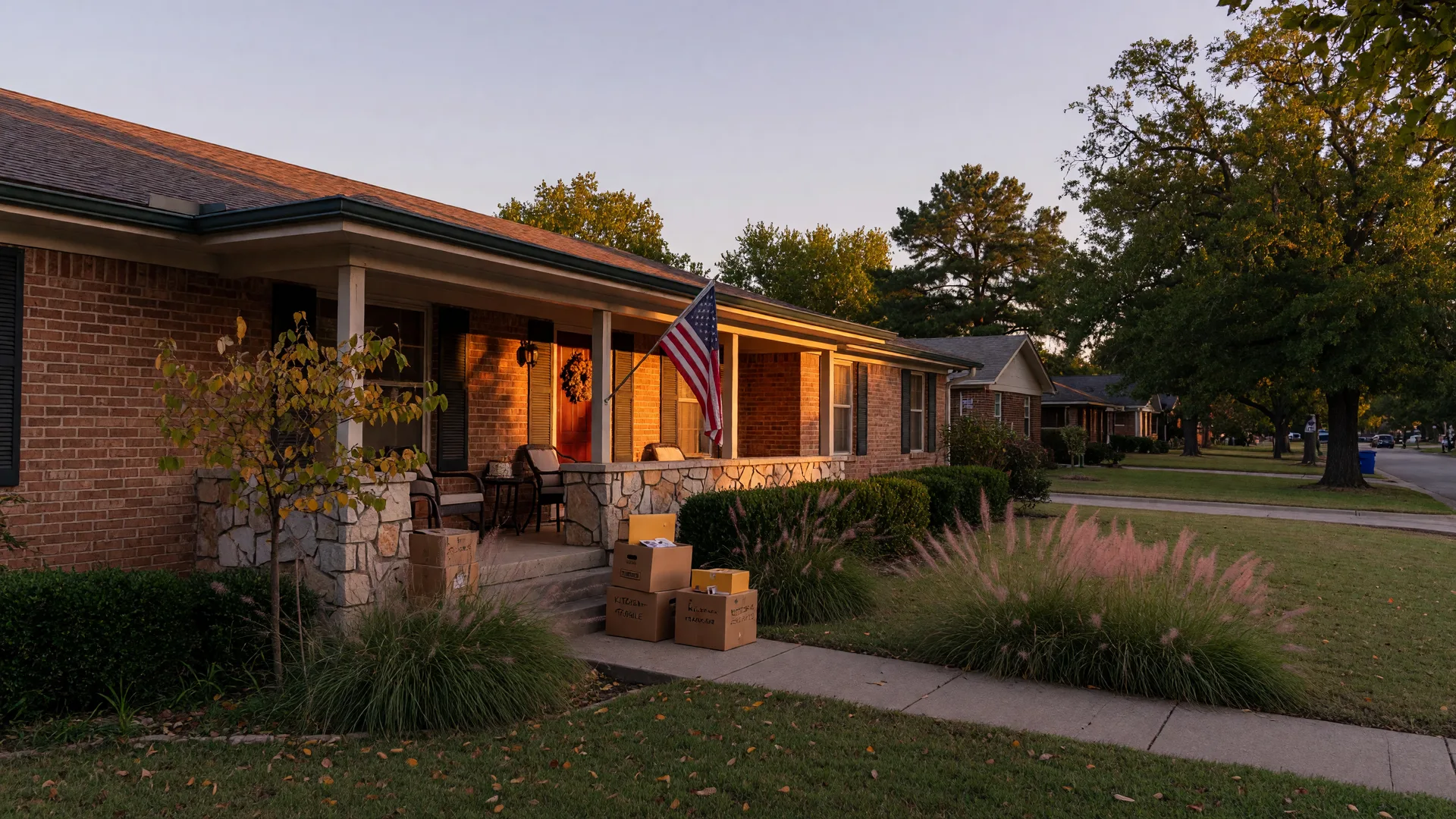
Why Empty Nesters Are Selling (and Staying) in North Texas
Downsizing is not a niche corner of the market: it is one of the biggest demographic forces in American housing right now. A Redfin analysis of the nation’s largest metros found that empty-nest boomers own 28 percent of large homes (three-plus bedrooms) while millennial families, the very households who need that space, own just 16 percent. Here in DFW, empty nesters own a bigger share of the big houses than families with children do, and the same analysis found that is true in nearly every major metro.
Whether that translates into a for-sale sign has been the question of the last few years. The so-called lock-in effect, homeowners reluctant to give up a low mortgage rate, kept a lot of would-be downsizers in place. At the same time, the DFW market cooled from its pandemic-era frenzy into something more balanced: year-end 2025 market reports pegged the median sale price near $355,000 in Dallas County and near $335,000 in Tarrant County, each down a few percent from the prior year, and local reporting has followed Fort Worth homeowners wrestling with exactly this sell-or-stay decision.
So what actually tips the scale? In my experience the honest reasons to sell are practical: a two-story home gets harder to manage, insurance and utilities climb, and a paid-off house still costs real money every month in upkeep. The reasons to stay are usually emotional, and one very specific financial one. That financial reason is the Texas school tax freeze, and it deserves a closer look before you make a decision, because a lot of people misunderstand it.
The Texas Tax Break That Should Change Your Math
Texas property taxes are the biggest recurring cost of owning here, and Texas gives homeowners 65 and older two powerful tools: big exemptions and a school tax freeze. For tax year 2026, the general school-district homestead exemption is $140,000 off the appraised value for school taxes, and homeowners 65 or older get an additional $60,000 over-65 exemption on top of it, for a combined reduction of up to $200,000. Both amounts were approved by Texas voters, the over-65 increase as Proposition 11 in November 2025, and they are detailed on the Texas Comptroller’s property tax exemptions page.
The freeze is the part people remember. Under Texas Tax Code Section 11.26, once you qualify for the over-65 exemption, your school district tax bill is frozen at the amount it was in your first qualifying year, and the district cannot raise it. Counties, cities, and junior college districts can also grant optional additional exemptions (at least $3,000) and some have their own ceilings, so the full picture varies by where you live.
Here is the part that surprises most people: the school tax ceiling transfers to a new home if you move. It does not follow as a dollar amount; what transfers is the ratio of your old ceiling to your old home’s taxable value, applied to the new home. You apply for the over-65 exemption on the new home with the new county appraisal district and request the transfer. The rule is in place specifically so seniors are not trapped in an oversized house to keep their tax break. The general exemption deadline is April 30 of the tax year (late applications can often still be accepted, and appraisal districts have latitude), so file early in the year you move.
The two questions to ask before you stay
- Can the freeze transfer? If you are 65 or older and move to another Texas primary residence, the school tax ceiling transfers to the new home. Call the new county appraisal district, ask exactly how the transfer works in that county, and get it in writing.
- What is the new home actually costing monthly? Taxes, insurance, HOA dues, and utilities on the smaller place can be far lower than the family home, which is the whole point. Run the real numbers before you assume staying is cheaper.
What Downsizers Are Actually Buying in North Texas
The most common downsizing purchase in DFW is a single-story patio or garden home, roughly 1,500 to 2,500 square feet, with most of the living space on one level and the yard work handled by an HOA. Those homes generally trade in the $350,000 to $600,000 range depending on location. A close second is a smaller home in the same community, so the move does not mean leaving the neighborhood, the church, or the golf circle behind. A third group moves into a 55-plus or active-adult community for the amenities and the built-in social calendar.
Keller and the surrounding area have real options in every category. The 55places guide to Keller lists two dozen-plus active-adult and 55-plus communities in the immediate area, including Villas of Stone Glen in 76248, a gated community of roughly 115 maintenance-free patio homes with a pool and a large activity center; Evergreen at Keller on Bourland Road; and the Conservatory at Keller Town Center. Just north, Robson Ranch in Denton is one of the largest active-adult communities in North Texas, with thousands of homes, golf, and clubhouse life. In 76244, the Album Keller Ranch development offers an age-qualified apartment option for those who want to rent for a season before committing.
The price ranges differ by side of town, and the Redfin 2026 market pages show that clearly: the median sale price in 76248 runs near $615,000, while 76244’s median sits closer to $399,000. Both zip codes are worth a look, but for different reasons, which is a good argument for touring with a buyer’s agent who knows the difference. Our 76248 guide and 76244 guide dig into each side of town, and the neighborhood checklist post covers how to vet any community before you commit to it.
The Financial Checklist Before You List
Before the first showing, run through these four items, because each one can change the plan.
1. Your capital gains picture
Under IRS rules, a single filer can exclude up to $250,000 of gain on the sale of a primary home, and married couples filing jointly up to $500,000, if they owned and lived in the home two of the previous five years. Most downsizers clear this bar with room to spare. A CPA or tax professional should confirm your specific situation.
2. The true net
Selling costs, agent commissions, title insurance, and tax proration all come out of the proceeds. Our cost-of-selling breakdown walks through the line items on 76248 and 76244 price points so the net number is real, not a guess.
3. The new home’s monthly cost
The monthly payment is only part of it. Add the property taxes on the new home (the over-65 exemptions help), insurance, HOA dues, and utilities. Downsizing often cuts the total monthly nut by hundreds of dollars, but only if you run it.
4. The timeline
Decide whether you sell first or buy first, and know your options for the gap. Many DFW sellers negotiate a rent-back to stay in the home after closing while the next one wraps up. The move-up playbook covers the sequencing either direction.
A Room-by-Room Downsizing Plan
The practical work of downsizing is deciding what goes. A simple system works better than an ambitious one: go room by room with three categories, keep, sell, and donate, and handle the hardest rooms first. Start with the attic, the storage room, and the kids’ bedrooms, because they are where decades of “we might need that someday” actually live, and they are the rooms where a hard no saves the most money. Then measure the new floor plan before you make any keep pile permanent: a home is not a storage unit, and the furniture that fit a living room that could hold a holiday gathering will not necessarily fit a patio home’s great room.
One caution from years of listing homes: do not undertake a big renovation right before selling the family home in this market. What moves a house now is honest pricing, strong presentation, and condition that does not invite large repair demands from buyers, not the new kitchen you will not get to enjoy. Decluttering, a neutral refresh, and curb appeal go further than a remodel, and if you are unsure what your home needs, an agent’s pre-listing walkthrough is the cheapest market research you will ever get.
The Market Reality: Pricing and Pace This Fall
The market your family home enters in fall 2026 is a balanced one. Buyers have choices, days on market have stretched compared to a few years ago, and well-priced, well-presented homes in good locations still find buyers quickly, while others sit. That makes the launch everything. Pricing from day one, professional photography and video, and a marketing plan aimed at the right buyer pool matter more than ever, and the first-two-weeks post explains why the launch sets the ceiling for the whole sale.
If you are also buying the next home, remember the playing field is more balanced for that side too: get pre-approved early, know the real monthly cost of the smaller place (the ownership-cost post runs those numbers honestly), and act when the right single-story home appears, because the serious downsizers are still competing for the best ones. This is the work Aaron and The Kinn Team do every week, and it is a listed specialty on our services page along with the full story on Aaron’s background serving DFW since 2001.
Ready to Run Your Own Numbers?
A 20-minute conversation about your home, your equity, and what the next chapter should cost is the fastest way to clarity. No pressure, just a real plan.
Frequently Asked Questions About Downsizing in DFW
Does the 65-plus school tax freeze transfer if I move to a new home?
Yes. Under Texas Tax Code Section 11.26, the school tax ceiling transfers to a new Texas primary residence. The freeze transfers proportionally (the ratio of your old ceiling to the old home’s taxable value is applied to the new home), and you must apply for the over-65 exemption on the new home and request the transfer with the new county appraisal district.
How much home-sale gain can I exclude from taxes?
Under IRS Section 121, up to $250,000 for single filers and up to $500,000 for married couples filing jointly, if you owned and lived in the home as your primary residence for two of the five years before the sale. Confirm your situation with a tax professional.
What do patio homes cost in the Keller area?
Single-story patio and garden homes in DFW generally trade in the $350,000 to $600,000 range. In Keller specifically, Redfin’s 2026 data shows the median sale price near $615,000 in 76248 and near $399,000 in 76244, so the answer depends heavily on which side of town you choose.
Should I renovate the family home before selling it?
In this balanced market, pricing, presentation, and condition matter more than a remodel you will not enjoy. Decluttering, neutral paint, and curb appeal move homes; major renovations rarely return their cost when the goal is a downsizing sale.
When do I file for the Texas over-65 exemption?
The general homestead exemption deadline is April 30 of the tax year, and appraisal districts can accept late applications in many cases. If you turn 65 during the year or move to a new home, ask the county appraisal district about the deadlines for that year when you apply.
Sources and a Note on the Numbers
Texas exemption amounts, the school tax freeze, and the transfer rule come from the Texas Comptroller’s property tax exemptions page and Tax Code Section 11.26. The capital gains exclusion comes from IRS Topic 701. The empty-nester housing-mismatch statistics come from Redfin’s analysis of the nation’s largest metros, and the year-end 2025 DFW market figures from local market reporting including the Fort Worth Star-Telegram. Keller zip-code medians come from Redfin’s 76248 data and 76244 data, and the 55-plus community list from the 55places Keller directory. Figures vary by source and shift over time, so treat them as direction rather than precision, and confirm tax details with a CPA or the county appraisal district before making decisions.
For more on the selling side, read the real cost of selling in Keller and why the first two weeks on market decide your price. For the buying side, the pre-approval guide and neighborhood checklist are good next reads, and the 76248 and 76244 guides show what each side of Keller offers. And if you would rather talk it through than read another page, that is what a consultation is for.

Written by

Aaron Kinn
Broker Associate, Team Leader, eXp Realty, LLC · A.I. Certified Agent™
For 25 years I have helped buyers and sellers across the Dallas-Fort Worth Metroplex, with Keller as home market.
Areas I Serve Across Keller

Keller
Established neighborhoods in 76248 and newer construction in 76244, with mature trees and a walkable town center.

Southlake
Large brick and stone custom homes on generous lots around Southlake Town Square.

Westlake
Gated estate communities with large custom homes on acreage lots.

Northlake
Newer master-planned communities beside preserved ranch land along the Alliance corridor.

WORK WITH ME
Buying or Selling in Keller?
Whether you are buying or selling, the first step is a simple, no-pressure conversation.
817-939-6584 · No pressure, no obligation.
Written by
Aaron Kinn
Founder and lead advisor of The Kinn Team, serving buyers and sellers across North Texas with Keller as home market. Downsizing and right-sizing are among the specialties the team works every year.