BUYER & SELLER GUIDE · NORTH TEXAS
Texas Property Taxes: What Buyers and Sellers in Keller and North Texas Need to Know
OCTOBER 12, 2026 · BY AARON KINN · KELLER, TEXAS
Texas property taxes are the biggest recurring cost of homeownership that most buyers never see on the listing sheet, and the most misunderstood line on a seller’s closing statement. This guide explains how the bill is actually built, the homestead exemption that saves the most money in 2026, what a Keller tax bill really looks like, and how taxes are prorated when you buy or sell. Every figure below was verified against the Texas Comptroller, the Tarrant Appraisal District, Keller ISD, and the City of Keller during the week of October 12, 2026.
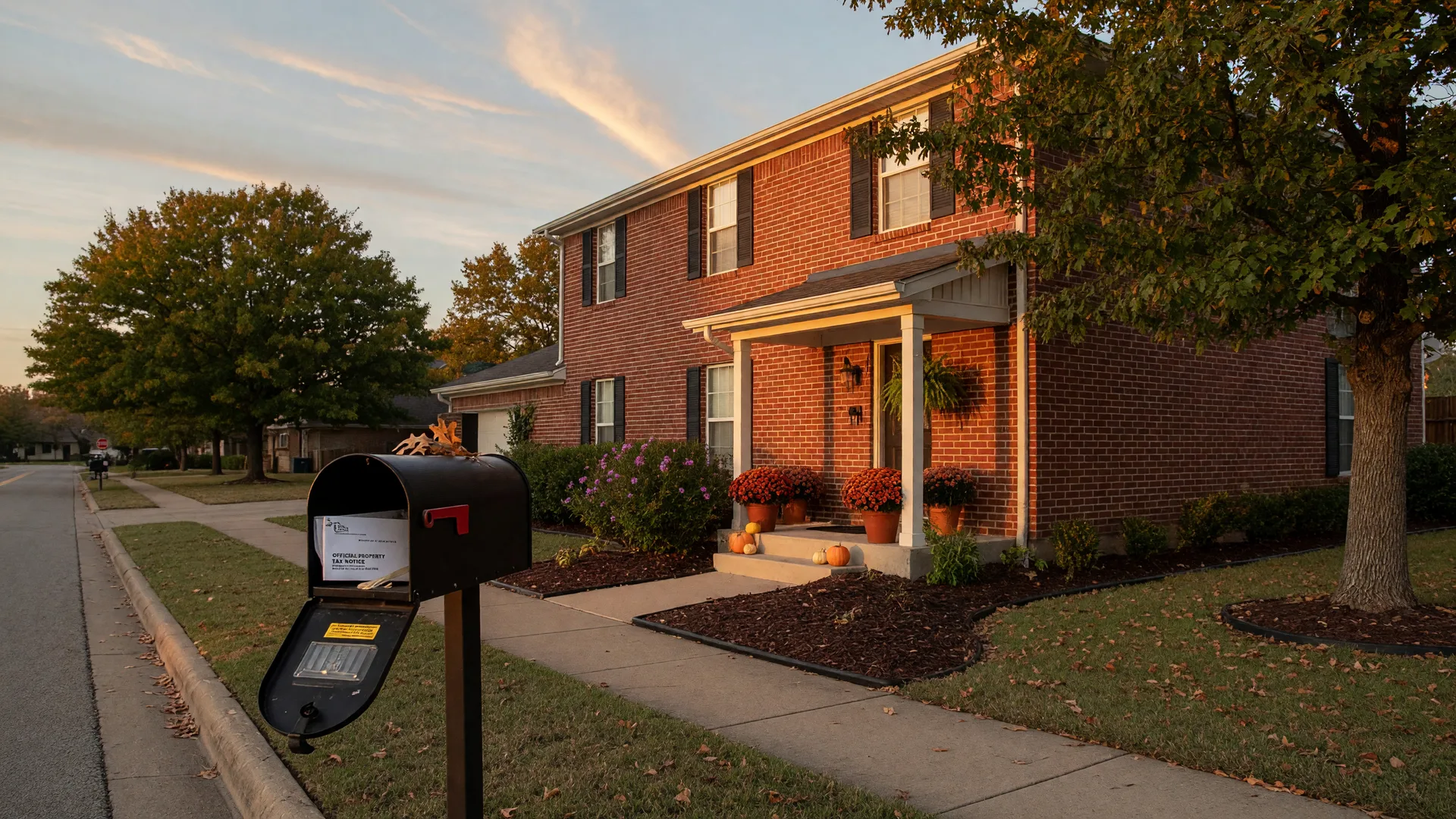
Why Property Taxes Deserve a Line in Your Budget Before You Offer
Texas has no state income tax, and property taxes are the trade-off that pays for it. The Tax Foundation’s 2026 data puts Texas at a 1.40 percent effective property tax rate on owner-occupied housing, nearly 60 percent above the national average of about 0.89 percent. For a buyer, that means the tax bill is not a footnote on the monthly budget, it is often the second or third largest line after the mortgage itself. For a seller, it shows up as a proration credit at closing and as a number the buyer’s lender will scrutinize before approving the loan.
The good news is that Texas property taxes are also one of the most controllable costs in the homebuying equation, provided you know the rules. The homestead exemption, the 10 percent appraisal cap, and the annual protest window are all tools that keep real bills lower than the sticker shock of the first notice. This guide walks through each one, with the Keller numbers that matter most.
How a Texas Property Tax Bill Is Built
Every Texas property tax bill is the same formula: the appraised value set by your county appraisal district, minus any exemptions you qualify for, multiplied by the combined tax rate of every taxing unit that serves your address. In Keller, that means Keller ISD, the City of Keller, Tarrant County, and a handful of county-level districts including the hospital district, the community college district, and the regional water district. Each one sets its own rate, and they all land on the same bill.
Two words in that formula matter more than anything else: appraised value and exemptions. The appraisal district decides the value, and it is the one number in the formula you can challenge every year. The exemptions are the legal discounts you must apply for yourself, and they are where most homeowners leave money on the table. Most Keller homes in 76248 and 76244 are appraised by the Tarrant Appraisal District; the city of Keller also reaches into Denton County, and Keller addresses that sit there are appraised by the Denton Central Appraisal District instead.
The Homestead Exemption: The One Form That Saves the Most
The residence homestead exemption is the single most valuable form in Texas property tax law, and it only applies to the home you actually live in. For tax year 2026, the school district portion of the exemption is $140,000 of appraised value, up from $100,000. Voters approved the increase as Proposition 13 on November 4, 2025, and it took effect January 1, 2026. That means a home appraised at $500,000 with the exemption on file is taxed by its school district on just $360,000 of value.
The exemption also carries two powerful side benefits. First, the 10 percent appraisal cap: once you hold the homestead exemption, your home’s appraised value cannot rise more than 10 percent in a single year, plus the value of any new improvements, even if the market jumps far more. Second, it is the key that unlocks the over-65 and disabled-person school tax freezes later in life. Counties also have a general homestead exemption of $3,000, though many Texas counties opt out of it, so check your own county’s rules rather than assuming.
The catch is timing. You must file the application with your county appraisal district between January 1 and April 30 to get the exemption for the current tax year, and you must file it yourself, in most cases with a simple one-page form and a copy of your driver’s license or utility bill. It does not transfer automatically when you buy, and it does not transfer to the next owner when you sell. If you bought a home this year and have not filed yet, that April 30 deadline is the date to put on your calendar.
The 10% cap
With a homestead exemption on file, your appraised value can rise no more than 10 percent per year, plus new improvements, even when market value climbs faster. In a market like North Texas, that cap is what keeps a tax bill from tracking the hottest comps on the street.
File by April 30
The general deadline to file a homestead application is April 30, so the exemption applies for the current tax year. Buyers who close mid-year should file as soon as they own the home, not wait for the first notice to arrive in the spring.
What a Keller Tax Bill Actually Looks Like
The rates behind a Keller home’s bill, each verified against the taxing unit’s own published figures for the 2025 tax year: Keller ISD adopted $1.0852 per $100 of taxable value for the 2025-26 school year, unchanged from the prior year, split between $0.7552 for maintenance and operations and $0.3300 for debt service. The City of Keller adopted $0.2870 per $100 as a no-new-revenue rate, and Tarrant County’s adopted rate is $0.1862 per $100. Add the county-level hospital, college, and water districts on top, and combined Keller-area totals typically run roughly 1.9 to 2.1 percent of taxable value.
To see how the pieces stack, take a home appraised at $500,000 in Keller with the homestead exemption on file. For school taxes, the $140,000 exemption drops the taxable value to $360,000, and at Keller ISD’s $1.0852 rate that portion of the bill comes to about $3,907 for the year. The county, city, and district rates apply on top, which is why the full bill usually lands several thousand dollars higher than the school portion alone. As a broad illustration, a home with roughly $400,000 in total taxable value across all units would carry a bill in the neighborhood of $7,600 to $8,400 per year at the 1.9 to 2.1 percent combined range. These are illustrations, not an estimate for any specific address, and your own bill depends on your appraised value, your exemptions, and your exact taxing units.
For Sellers: How Taxes Are Prorated at Closing
When you sell in Texas, property taxes are split by the day, and the split is handled automatically in the closing paperwork under the standard TREC contract. The seller pays for every day they owned the home, from January 1 through the day before closing, and the buyer pays from the closing date through December 31. Because the current year’s final bill is not known at closing, the proration is calculated using the most recent tax bill, and the seller’s share is issued as a credit to the buyer on the settlement statement. The buyer then pays the full bill when it comes due.
Two practical notes for sellers. First, the proration is based on the prior year’s bill, so if your appraised value jumped or your exemptions changed, the credit may not match the actual bill the buyer pays, and the difference settles between the parties rather than through the county. Second, if your home qualifies for the over-65 school tax freeze, that freeze is tied to you, not to the house. It does not transfer to the buyer, and the buyer’s bill will be based on the full rate with their own exemptions, so price expectations should account for the buyer’s real carrying cost. For the full line-by-line picture of what a sale costs, see our guide to the real cost of selling in Keller.
For Buyers: Five Things to Check Before You Offer
The tax bill is baked into every mortgage approval, so it pays to check it before you fall in love with a house. Here is the short list I walk buyers through in Keller, Fort Worth, and across the metro:
1. Look up the appraised value yourself
The Tarrant Appraisal District’s website lets anyone search a property’s appraised value, exemptions, and tax history by address. It takes two minutes and tells you what the county thinks the house is worth, which is often different from the list price.
2. Confirm what exemptions are actually in place
A seller’s homestead exemption does not transfer to you, and neither does an over-65 freeze. Ask the seller’s agent what exemptions are on file, then budget for the bill you will pay with your own exemptions, not the one the seller pays today.
3. Budget the full bill, not just the school portion
The school district is usually the biggest slice, but the county, city, hospital, college, and water districts all add on. Ask your lender for the estimated annual tax figure they used in your approval, and sanity-check it against the combined Keller-area range of roughly 1.9 to 2.1 percent of taxable value.
4. Ask about the current year’s bill
Texas tax bills are due by January 31 and become delinquent on February 1, with penalty and interest added. If you are closing near year-end, confirm with your title company whether the current year’s taxes have been paid, so the proration and any delinquency are handled before you sign.
5. File your homestead exemption the month you close
The April 30 deadline is for the current tax year, but there is no reason to wait. File with the appraisal district as soon as you own the home, and the $140,000 school district exemption plus the 10 percent cap start protecting your bill immediately.
The Protest: Your Right to Push Back on the Appraised Value
If you think your appraised value is too high, Texas gives you a free, formal way to fight it every year. The deadline to protest with the Tarrant Appraisal District is May 15, or 30 days after your Notice of Appraised Value is delivered, whichever is later, and the exact date is printed on the notice itself. Late filings are not accepted, and filing costs nothing.
The process starts informally: most disagreements are resolved by talking to the appraisal district, and Tarrant Appraisal District’s online dashboard allows value negotiation directly. If that does not settle it, file a notice of protest, and the district sets a hearing before the Appraisal Review Board, where you can present your own evidence, typically recent sales of comparable homes. If you still disagree with the board’s decision, you can appeal further, usually to district court. Most homeowners never get past the informal step, which is exactly why it is worth trying: a well-supported conversation about comparable sales resolves the majority of protests without a hearing.
Frequently Asked Questions
Does the homestead exemption transfer to me when I buy a home?
No. The exemption belongs to the owner who lives in the home, and it drops off when the owner sells. You must file your own application with the county appraisal district, and to get it for the current tax year, you file between January 1 and April 30. File as soon as you close and you will not lose a year of savings.
Do I pay property taxes through my mortgage escrow?
Usually yes. Most lenders require an escrow account that collects a monthly share of the estimated annual tax bill and pays it when it comes due. If your loan does not escrow, the full bill is due by January 31 each year, so set the money aside monthly yourself rather than facing the whole amount at once.
What happens to the over-65 school tax freeze when the owner sells?
The freeze stays with the owner, not the house. A buyer does not inherit it, and the new bill is set at the full rate minus whatever exemptions the buyer qualifies for. If a 65-plus homeowner moves to a new home in the same school district, the freeze can transfer as a percentage of the new bill, but it must be applied for on the new homestead.
Will the Keller ISD bond raise my property taxes?
The district states that voter approval of the $828.11 million bond package would not raise its tax rate, and the package is structured to keep the interest and sinking rate at its current level. The bond is on the November 3, 2026 ballot, with early voting October 19 through October 30. For the full breakdown of the five propositions, see our Keller ISD bond explainer.
Sources and a Note on the Numbers
Exemption amounts, the 10 percent cap, and filing and payment deadlines come from the Texas Comptroller’s property tax pages, including its guide to paying your taxes and the 10 percent cap explanation, with the 2026 exemption increase confirmed by Ballotpedia’s Proposition 13 summary. Protest deadlines and process come from the Tarrant Appraisal District’s protest and appeal procedures. Tax rates come from Keller ISD’s finance page, the City of Keller’s property tax page, and Tarrant County’s rates and exemptions page. The statewide effective-rate comparison comes from the Tax Foundation’s 2026 Texas data. Rates and values change every year, and every address is different, so treat this as education rather than tax advice, and confirm the specifics for your own property with your appraisal district, your title company, and your tax professional.
For the rest of the homebuying picture, start with the real monthly cost of homeownership in Texas and the step-by-step first-time buyer guide for Keller, then dig into the 76248 and 76244 guides. And if you want to know what the tax picture means for a specific home, your street, or your next offer, that is exactly what a conversation with me is for.

Written by

Aaron Kinn
Broker Associate, Team Leader, eXp Realty, LLC · A.I. Certified Agent™
For 25 years I have helped buyers and sellers across the Dallas-Fort Worth Metroplex, with Keller as home market.
Areas I Serve Across Keller

Keller
Established neighborhoods in 76248 and newer construction in 76244, with mature trees and a walkable town center.

Southlake
Large brick and stone custom homes on generous lots around Southlake Town Square.

Westlake
Gated estate communities with large custom homes on acreage lots.

Northlake
Newer master-planned communities beside preserved ranch land along the Alliance corridor.

WORK WITH ME
Buying or Selling in Keller?
Whether you are buying or selling, the first step is a simple, no-pressure conversation.
817-939-6584 · No pressure, no obligation.
Written by
Aaron Kinn
Founder and lead advisor of The Kinn Team, serving buyers and sellers across North Texas with Keller as home market.