BUYER GUIDE
Home Inspections in Keller, Texas: What to Know Before the Option Period Ends
SEPTEMBER 21, 2026 · BY AARON KINN · KELLER, TEXAS
In Texas, the clock on a home purchase doesn't stop when you sign the contract. The state's standard residential contract includes a negotiated option period, a short window that lets you inspect the home and back out for any reason before you're locked in. For buyers across Keller, Southlake, Trophy Club, and the rest of the DFW metro, that window is where the home inspection lives. Here is how the option period actually works, what an inspection costs in North Texas in 2026, what inspectors look for, and how to use the report once it lands.
The Option Period: Your Inspection Window, Explained
Under the Texas Real Estate Commission's One to Four Family Residential Contract, the option period is a negotiated block of days that starts on the contract's effective date. Seven to ten days is the most common length, but it is fully negotiable: some buyers negotiate three, five, or as many as fourteen, and in hot markets some waive the option entirely to make their offer stand out. What you give up when you waive it is the right to walk away free and clear, so it is never a decision to make casually.
In exchange for the option, the buyer pays the seller an option fee, typically $100 to $500, due within about three days of the effective date. The fee is nonrefundable, which is exactly why it works: it compensates the seller for taking the home off the market while you do your homework. If the deal actually closes, the fee is credited toward the sales price, so it isn't a sunk cost when everything goes well.
During the option period you may enter the property at reasonable times for inspections and due diligence, and you can terminate the contract for any reason, or no reason at all, by giving written notice before the deadline, usually 5 p.m. on the final day. Your earnest money comes back. You only lose the option fee. Miss that deadline and the unrestricted right to walk away ends, which is why the inspection calendar matters as much as the inspection itself.
What a Home Inspection Costs in DFW, and How Long It Takes
Most DFW inspectors charge $350 to $625 for a standard single-family home in 2026, with typical quotes landing around $450 to $500 for a home under about 2,500 square feet. Smaller homes under 1,500 square feet run closer to $375 to $475, and larger or older homes can climb to $700 or more. Plan on the inspector spending two to four hours on site, and the written report usually arrives within 24 to 48 hours after the visit.
Budget for the add-ons as well. A sewer scope is worth real money on older homes, where tree roots and settling clay put stress on underground lines. A wood-destroying insect (termite) report is often required by lenders anyway. Pools, additional structures, and radon testing each add cost on top of the base quote. And check the credential before you book: Texas home inspectors are licensed through the Texas Real Estate Commission, so confirm the license is current before anyone climbs your future roof.
What Inspectors Are Looking For in a North Texas Home
The conditions that show up most often in DFW inspections are predictable if you know the region, and most of them trace back to two things: the weather and the dirt.
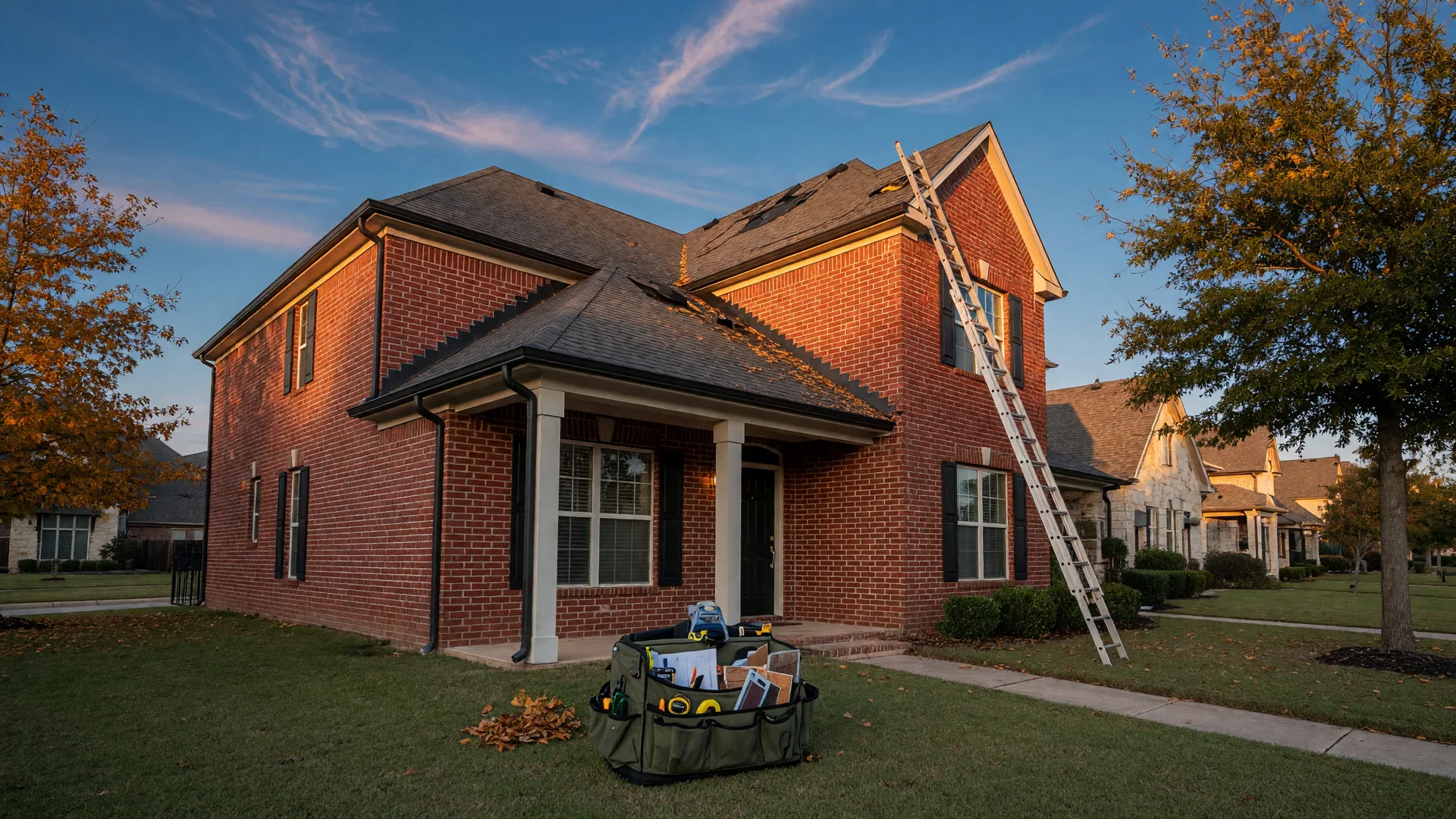
The roof. Hail damage is one of the most common findings in North Texas, and the region averages more than ten significant hail events a year. Add the Texas sun, and you get aging shingles, granule loss, wind-lifted tabs, and cracked flashing. A roof nearing the end of its life is a legitimate negotiation item, not a scare tactic.
The foundation. Over half of North Texas sits on expansive clay soil, the same ground under most of Keller's 76248 and 76244 neighborhoods. That clay swells when wet and shrinks when dry, which is why slab movement, wall and ceiling cracks, sticking doors, and cracked brick mortar show up on so many reports. Foundation issues are common, but "common" is not the same as "unfixable": many are manageable, and knowing which ones matter takes a specialist, not a scare.
The drainage. This is the quiet one, and the one with the most prevention value. Water pooling against the slab is the number one environmental trigger for foundation movement, so inspectors pay close attention to grading, downspouts, and whether the yard slopes away from the house. A few hundred dollars in grading work can protect a foundation that would cost tens of thousands to address later.
The systems. Heating and air conditioning get a hard look everywhere, and North Texas runs its HVAC hard for half the year. Plumbing follows: slab leaks, polybutylene pipes in older homes, aging water heaters, and sewer lines are all on the list. None of these are automatically deal-breakers, but they are all worth a price, and the inspection tells you what that price should be.
How to Use the Report: Don't Panic, Prioritize
No inspection report is clean, and that is true of every home, including the ones that sell for a premium. The question is never "Is there a list?" It is "What on this list matters?" I ask every buyer to sort the findings into three buckets before anyone picks up the phone.
Bucket one: safety. Electrical hazards, gas leaks, unsafe railings, fire and carbon monoxide issues. These get fixed or the deal gets re-thought, full stop.
Bucket two: major systems. The roof, the foundation, the HVAC, the plumbing. These are the expensive ones. Ask for repairs or a credit, and remember that in a competitive market your leverage is the option period itself. Once the deadline passes, your negotiating power drops sharply.
Bucket three: maintenance. Dripping faucets, missing grommets, tired caulk, a loose outlet cover. These are the noise. They are a to-do list for your first month in the house, not a reason to re-negotiate, and sellers know that too.
One more piece of advice I give every buyer: decide your walk-away number before the report arrives, not after. If the roof is shot and the estimate to replace it is $20,000, is that a deal you still want at a credit? Most of the time the answer is yes, and a good agent can make that math clear in ten minutes. But you want to know your line before the emotion of the report lands. If you want to see how the inspection fits into the whole purchase process, the step-by-step first-time buyer guide walks the full sequence from pre-approval to closing.
Frequently Asked Questions
How long is the option period in Texas?
The option period is a negotiated number of days written into the contract, typically 7 to 10 days after the contract's effective date. It can be shorter or longer by agreement, and in competitive markets some buyers shorten it, or waive it entirely, to make an offer more attractive. The deadline matters: you must give written notice before it passes, usually by 5 p.m. on the final day.
Who pays for the home inspection, and what does it cost?
The buyer pays for the inspection, and a standard single-family inspection in DFW in 2026 typically runs $350 to $625, with most quotes landing around $450 to $500 for a home under about 2,500 square feet. Add-ons like a sewer scope, a wood-destroying insect report, or a pool inspection add to the total. The fee is a due-diligence cost you absorb even if you walk away.
What happens to my option fee if I back out of the contract?
You lose the option fee, which is typically $100 to $500 and is paid to the seller. Your earnest money is refunded in full, and you walk away with no further obligation. That is the whole point of the option period: an inexpensive, defined exit before you are locked in.
Can the seller refuse to fix things the inspection finds?
Yes. Repairs found by an inspection are negotiated, not automatic. During the option period you can ask for fixes or a price credit through the repair addendum, but the seller can say no, and in a strong seller's market they often do. Your real leverage is the right to walk, so decide your priorities before you start asking.
One More Note for New-Home Buyers
Residential resale contracts come with the option period described above; new construction works differently. A builder's contract has its own inspection and walkthrough schedule, its own warranty structure, and deadlines that do not behave like a resale option period. If you are deciding between a resale and a new build, the new construction guide for Keller buyers covers the walkthroughs and warranty stages that protect you on the builder side.
Sources and a Note on the Numbers
The contract facts in this post draw on the Texas Real Estate Commission's contract guidance and a plain-language walkthrough of the termination option in the One to Four Family Residential Contract. Inspection pricing reflects 2026 DFW fee guides from Journey Home Inspections and Stonebriar Property Inspections. The findings list reflects DFW market observations reported by Noble Property Inspections and Semper Fi Home Inspections. Quotes vary by inspector, square footage, and add-ons, so treat the pricing ranges as direction rather than a bid, and confirm the option-period dates in your own contract before you rely on them.
When the report lands, you don't have to interpret it alone. That is part of what an agent is for. If you are under contract or about to be, or you just want a second set of eyes on a report you already have, Book a Free Buyer Consultation

Written by

Aaron Kinn
Broker Associate, Team Leader, eXp Realty, LLC · A.I. Certified Agent™
For 25 years I have helped buyers and sellers across the Dallas-Fort Worth Metroplex, with Keller as home market.
Areas I Serve Across Keller

Keller
Established neighborhoods in 76248 and newer construction in 76244, with mature trees and a walkable town center.

Southlake
Large brick and stone custom homes on generous lots around Southlake Town Square.

Westlake
Gated estate communities with large custom homes on acreage lots.

Northlake
Newer master-planned communities beside preserved ranch land along the Alliance corridor.

WORK WITH ME
Buying or Selling in Keller?
Whether you are buying or selling, the first step is a simple, no-pressure conversation.
817-939-6584 · No pressure, no obligation.
Written by
Aaron Kinn
Founder and lead advisor of The Kinn Team, serving buyers and sellers across North Texas with Keller as home market. He has walked clients through thousands of option periods, inspections, and repair negotiations.